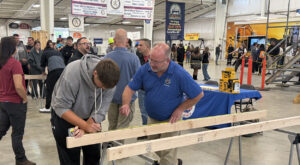
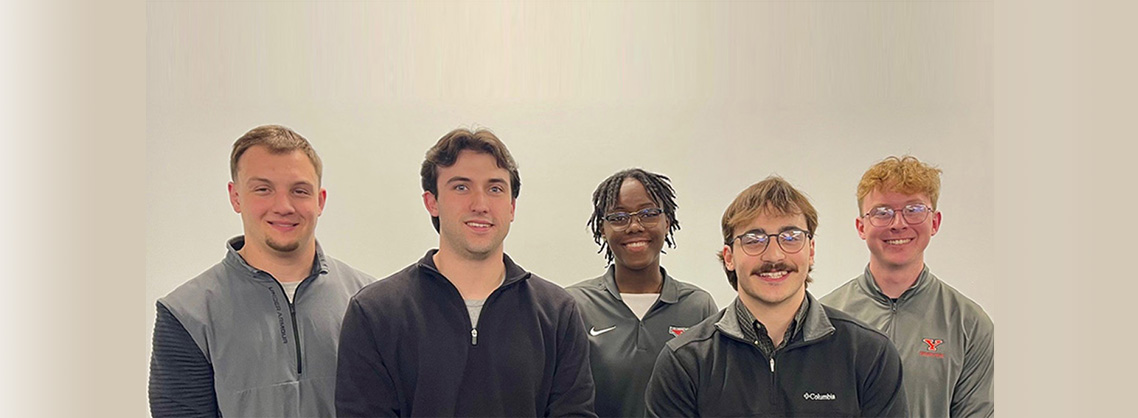
With pounding calculators and plan-covered tables, three student teams at YSU worked under the kind of pressure they’ll one day face on the job.
That was the point of The Builders Association’s 16th annual estimating competition on March 20.
“It’s the real world,” said Robert Korenic, professor and program coordinator, YSU’s Civil and Construction Engineering Technology program. “Students get experience in project estimation, but it’s also an exercise in teamwork.”
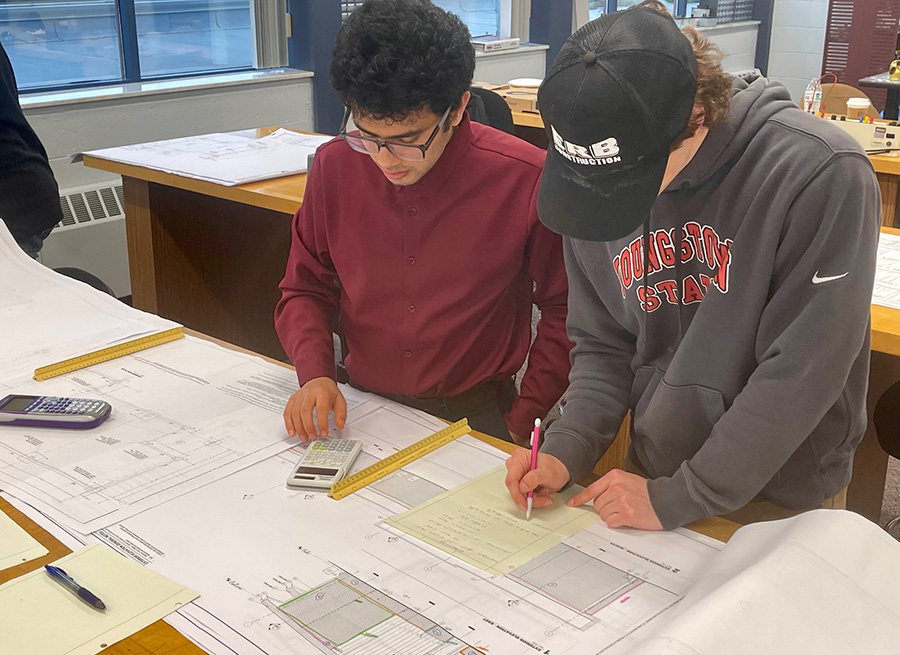
This year, CCET students were challenged to estimate the cost of The Builders’ office in Vienna.
Working with contractor mentors, who are also Builders’ members, the teams spent the day calculating bids for the project before turning them in for review and interviewing with judges.
Built on jobsite pressure
Students that participated were sophomores to seniors, with a mix of first-time and returning competitors.
Korenic and Joe Sanson, associate professor for the CCET program, helped organize the event.
Mentoring the teams were representatives from Boak & Sons, RIEN Construction, Shook Construction, Tervo Masonry, United Contractors Inc. and Stevens Masonry Construction.
“The mentor piece is what makes this so beneficial,” said Ken Reid, association services director, The Builders. “Students spend the day working alongside professionals who do this every day, and that creates real connections.”
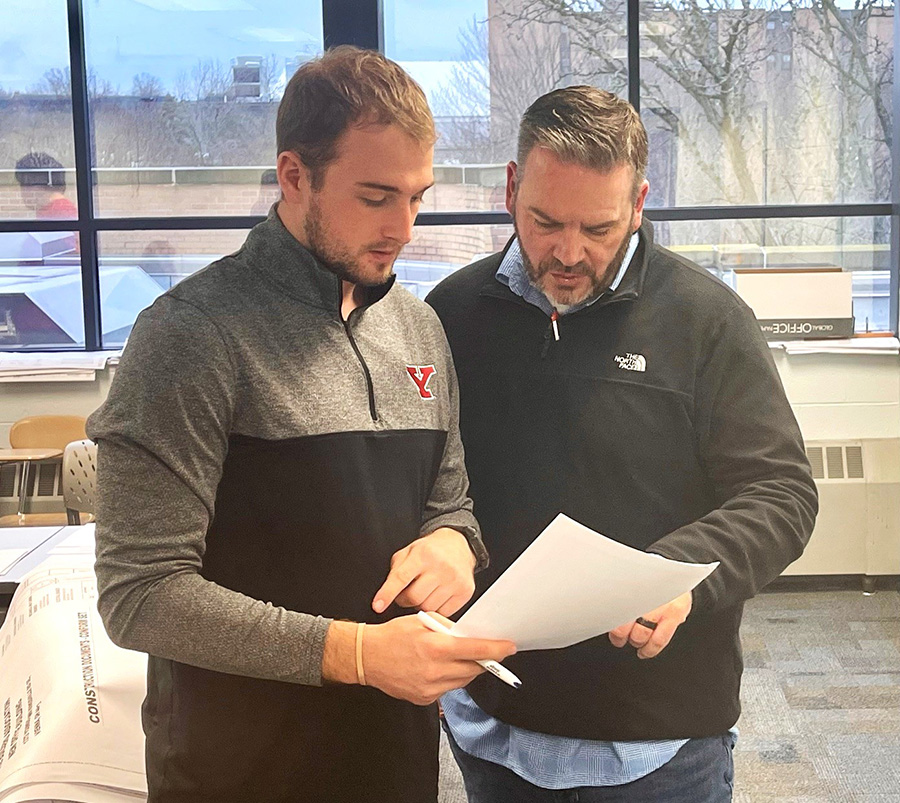
Chris White, vice president of operations at Boak & Sons and board president for The Builders, believes the pressure of the project gave a dose of reality. His team pushed through the assignment with fewer members than the others.
“They started with four people and finished with three, and did a stellar job of working through that,” White said.
He stressed the situation mirrored what happens on an actual job, when plans change and someone else has to step in.
“Sometimes, you’ve got to pick up the pieces and go on. That’s pretty real-world.”
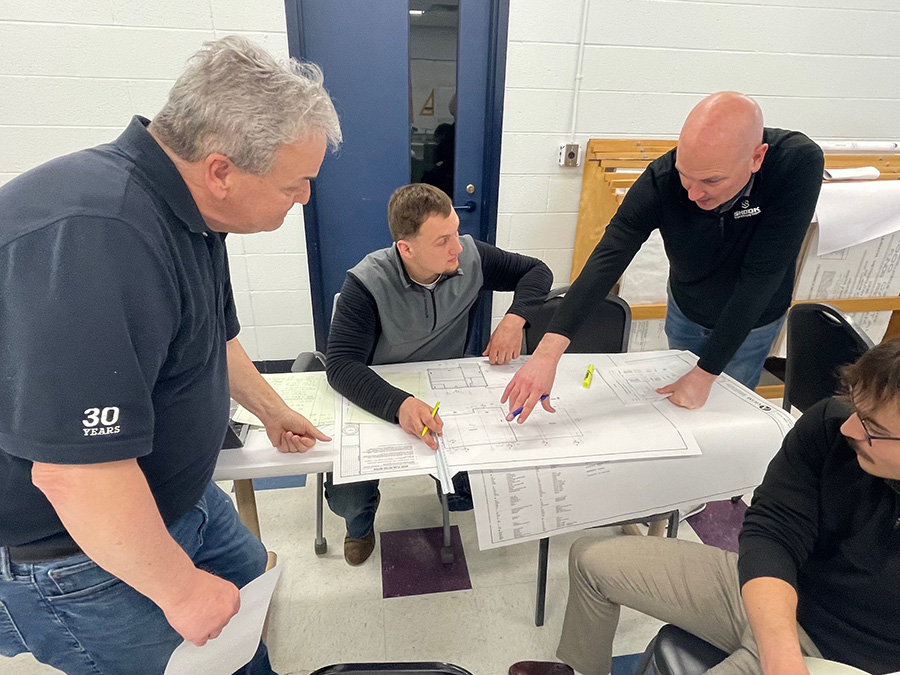
Ed Stevens, president of Stevens Masonry Construction, was impressed by the talent in the room and the opportunities in front of many of the students.
“The sky’s the limit. They can become estimators, project managers or owners. They can start in the field, move into the office and run jobs. It’s wonderful to see,” Stevens said.
Experience that sticks
Luke Blasko, a senior and returning participant, was a team leader this year and said the compressed timeline added to the realism.
“A project this big, you would get maybe a month or two to work out an estimate. Trying to work with a group under that kind of pressure feels a lot more like what you’d experience in the field,” he said.
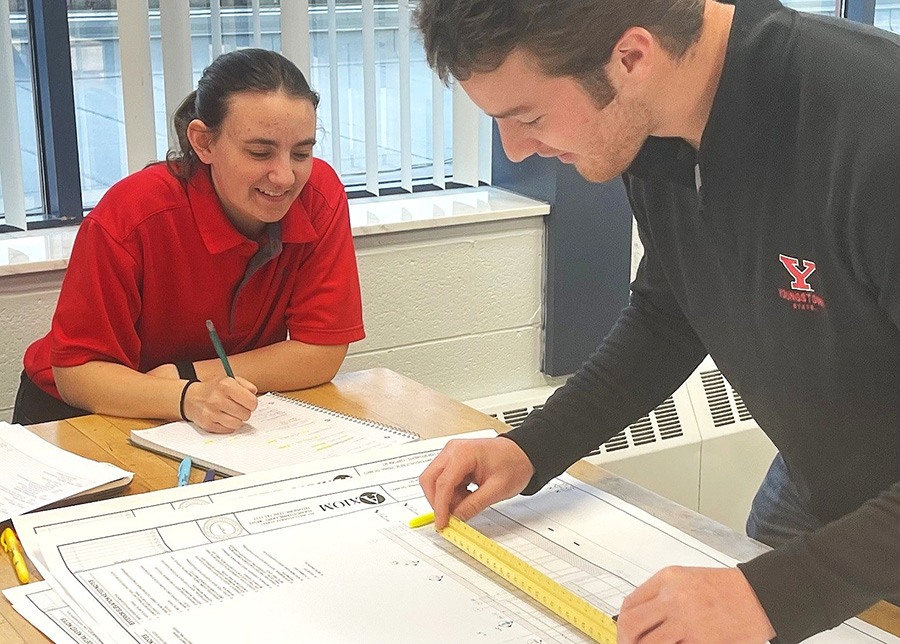
Sophomore Emma Repula said prior internship experience gave her an edge.
“I worked with a big construction company in Cleveland last summer, and that allowed me to have a better idea of what to expect for the competition,” she said.
Repula pointed to teamwork as being one of the biggest takeaways from the competition and learning to overcome obstacles.
“We all had things we needed help with at one point.”
Framing the future
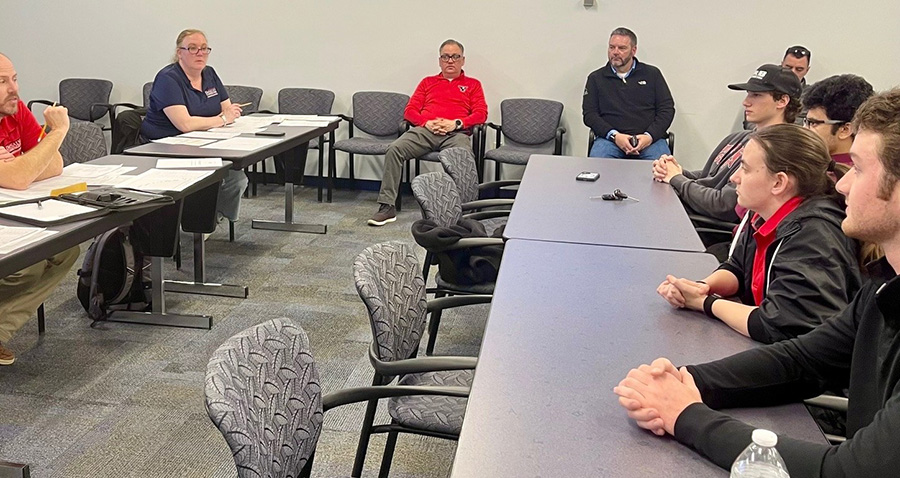
Once bids were submitted, judges scored the teams based on their estimates, along with the interviews explaining how they arrived at their numbers. The winning team was mentored by Ed Stevens and Jason Gibson, project manager at Shook Construction.
The judges panel included Craig Fauvie, senior estimator at GFT in Pittsburgh, Billy Sullivan, of The Hudson Companies, along with Jo-Lynn Campbell and Jim Bayer, both of DeSalvo Construction.
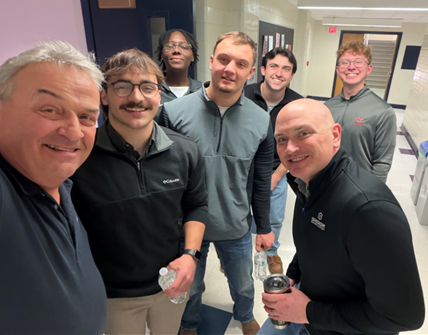
Campbell and Bayer have been involved in the competition for years. Campbell is an estimator and project manager now, but her career pathway can be traced back to participating in the event three times as a YSU student.
“Jim Bayer mentored my team, and that’s what led me to my job at DeSalvo,” Campbell said.
They’re the perfect example of how the competition can be a connection to a career opportunity.
At the end of the day, the event was not just a test of estimating skills, it also linked students with employers and gave them a clearer view of what the future can hold.
“If we can help by showing them the opportunities that are out there, have them in the same room with these contractors, it’s a win-win situation,” Reid said. “This is the workforce development.”